
Compare connections, not just SIM formats
A travel eSIM supplies cellular service to the device where it is installed. Pocket Wi-Fi supplies a Wi-Fi connection through a separate router. A third option is an eSIM-equipped phone sharing its connection: that still leaves the other devices dependent on a nearby host.
NINJA WiFi’s official use guide describes collecting the router, powering it on, joining its Wi-Fi network and returning it. That is a rental workflow, not a speed comparison. Apple’s Personal Hotspot guide explains that sharing uses the host’s cellular data; carrier support is required, and simultaneous-device capacity depends on the carrier and iPhone model. Neither source establishes that every router or phone supports the same workload.
For another carrier’s eSIM on an iPhone, Apple’s international travel guidance requires a compatible, unlocked device. Check the actual model and provider support with our compatibility guide. A phone unable to use the chosen eSIM may still have a usable Wi-Fi arrangement; verify that device’s Wi-Fi connection instead of treating a router as a carrier unlock.
For Japan package selection, use the existing Japan eSIM comparison and trip checklist. This page answers the different question of who depends on whom when the group moves.
Count the groups that need to be online at the same time
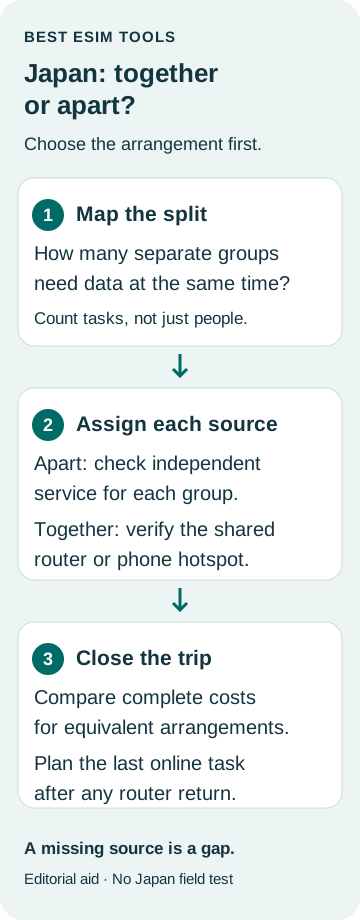
Start with the busiest split in your actual itinerary. The useful count is not the number of people on the booking. It is the number of separated groups that need an internet task during the same time window. A group of four can have one shared session at breakfast and three separate sessions an hour later.
Make one row per planned separation. Name the person carrying each connection source, the people relying on it, and the task they need. A row with no available source is an unresolved trip requirement. Do not hide it by averaging the cost across everyone.
A hypothetical family split
Suppose two adults visit different places while a child stays with one adult. One router can be assigned to either adult’s group, but the other adult’s required live map or message still needs an arrangement. Compare separate phone service, a second router, or a planned offline meeting—not a claim that one shared device covers everyone merely because it supports three connections.
This does not mean buying a connection for every traveller automatically. A child staying with an adult may not need an independent service. Another adult who wants to explore alone may. Record the task and the separation first; buy for the requirement that remains.
A hypothetical solo traveller with a laptop
One person can still have several devices. If the phone and laptop stay together, sharing may fit. If the laptop must remain online while the traveller takes the phone away, a phone hotspot no longer satisfies that work session. A separate router left with the laptop may address that dependency, while the traveller’s phone still needs its own arrangement.
These examples change the location of the connection source, not an assumed speed ranking. The right conclusion can be a mixed arrangement. Give the mixed option its own row and cost, rather than forcing every person into one format.
Compare the cost of completing the whole trip
Only compare options that satisfy the same split record, dates and essential tasks. A router for one group and eSIM service for three independently moving groups are not equivalent offers. Either bring the router option up to the required arrangement or mark the gap before comparing totals.
- Separate-service total: sum the final package totals for the devices that actually need independent service, plus any necessary disclosed add-ons or extra allowance.
- Shared-router total: use the rental total for the required dates and number of routers, then include disclosed collection/delivery, return, selected protection and necessary extras if not already included.
- Mixed total: combine the selected router and independent-service totals without counting an included item twice.
Keep all amounts in the same currency and record the quote date. If currency conversion is necessary, identify the rate and date rather than comparing the printed numbers directly. Leave an unseen checkout total unverified; a headline daily rate is not a completed whole-trip quote.
Put contingent costs in a separate line: what happens if the itinerary changes, a return is late, or equipment is lost? Do not add hypothetical penalties as if they are certain charges. Decide whether you can accept the condition, using the actual rental terms.
A larger group can make sharing attractive, but head count does not prove savings. Dates, device count, simultaneous separations and the purchased terms can change the result. Use “lower verified total for this arrangement” only after the comparable totals are available. This guide has not obtained live checkout quotes for a market-wide cheapest claim.
Keep the last online task before the rental return in view
Renting a router adds a physical handover. An installed eSIM has no rented router to return, although its service validity still needs checking. NINJA WiFi’s official FAQ, checked October 8, allows a different return counter after changing the location in My Page and treats extensions separately. That example does not establish another company’s return rules.
Write a short departure record before booking the rental:
- Last task: name the final task that needs live internet, rather than just writing “airport”. It might be receiving a changed pickup message or opening a booking.
- Handover: save the booked return location, terminal, accepted method, relevant opening hours or deadline, and the provider’s source. Do not assume a collection counter and return counter are interchangeable.
- Remaining window: identify what happens between handing over the router and completing that last task. Name a verified alternative or save the needed material offline.
- Responsibility: assign who returns the device and accessories, and how the rest of the group proceeds if the return takes longer than planned.
For a hypothetical early return, the router leaves the group before the flight. If a later task needs live data, “we rented Wi-Fi for the trip” does not close that gap. Conversely, if all remaining tasks are genuinely available offline, another data purchase may be unnecessary. The task decides; the format does not.
Is an eSIM less reliable in Japan?
A real Japan Guide forum question, posted December 3, 2025, asked: “Is an ESIM much less reliable right now?” The reader needed Google Maps, and later clarified that this was a family trip. It is a useful planning question, not a current network benchmark.
No comparable Japan field-test set is attached to this guide, so we cannot declare either format universally more reliable. Check the exact service’s network disclosure, plan limits and device suitability for the places and tasks that matter. A companion leaving a shared router’s range is a different failure from the router’s own internet service failing.
If sharing is essential, verify the actual permission and allowance. For phone sharing, follow our hotspot permission and connection checks; this comparison does not repeat its configuration or troubleshooting tutorial. For an iPad, keep the hardware question in the Cellular iPad guide.
Keep two separate observations in your own trip note: did the source device have internet, and did each intended user complete the required task through it? If the source works but a companion is elsewhere, change the arrangement. If the source itself fails, use the provider’s supported recovery steps. A successful task at one stop does not certify every later stop.
Pocket Wi-Fi versus eSIM questions
Which is better in Japan, pocket Wi-Fi or eSIM?
Use independently working eSIM service on compatible phones when travellers need data while apart. Consider pocket Wi-Fi when users stay near the shared router and its device, plan and rental conditions fit. Compare the complete group cost only after the required arrangement is satisfied.
Is an ESIM much less reliable right now?
This guide has no comparable Japan field-test set establishing a universal winner. Verify the exact service, device, locations and plan rules. Distinguish the source losing internet from a companion leaving the shared router’s range.
Is pocket Wi-Fi always cheaper for a family?
No. Compare equivalent arrangements for the same dates and simultaneous separations. Include the required routers or independent services and disclosed necessary costs; head count alone does not establish savings.
Can a phone without eSIM support use pocket Wi-Fi?
It may be able to join the router through Wi-Fi even when it cannot install the selected eSIM. Verify its Wi-Fi connection and the exact router’s support. Wi-Fi access does not unlock the phone for another carrier’s mobile service.
Can I share one eSIM with the whole group?
A supported phone can provide a hotspot when its carrier and exact plan permit it. Other users remain dependent on that host and its available sharing connection. This is not independent mobile service for companions who leave the host.
What should I check before returning a rental router?
Confirm the booked provider’s return method, location and applicable hours or deadline. Identify the last task requiring live internet and the arrangement available after handover. Do not transfer another rental company’s return policy to your booking.
Evidence and next steps
Official Apple and NINJA WiFi sources linked above were checked October 8, 2026. They establish bounded device and rental workflows, not a universal recommendation, current market price or measured Japanese coverage. The dated community post supplies the real reliability question; its replies are not used as current price or performance facts.
The split log, total-cost worksheet, last-online-window record, scenarios and infographic are independent editorial tools. They are not first-hand field tests. Recheck the exact products before purchase. For the installation procedure, continue to the existing eSIM installation guide rather than treating this comparison as setup instructions.